
Published: Oct 19, 2026
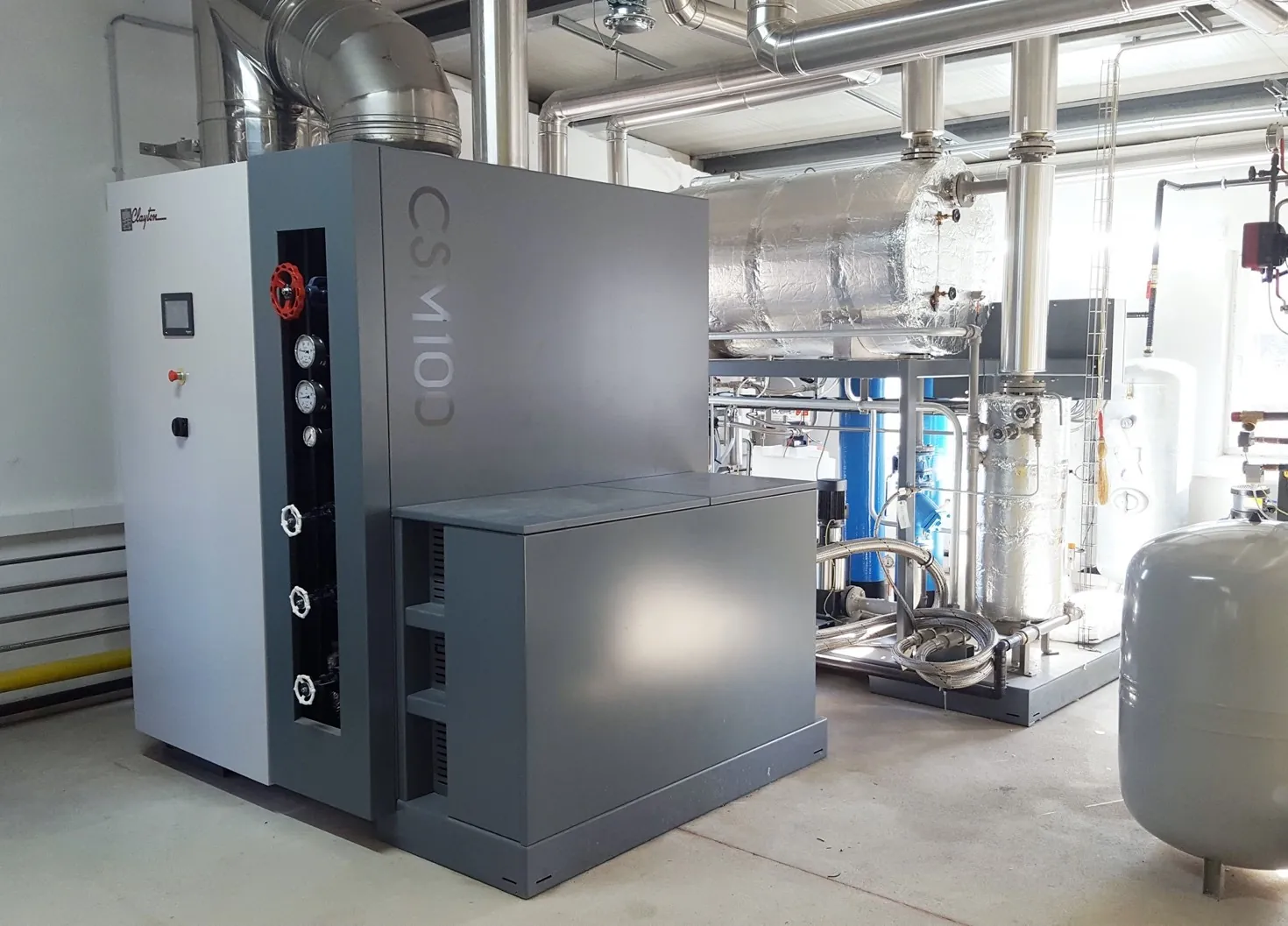
Industrial steam generation is changing. Rising energy costs, electrification and pressure to reduce emissions are encouraging manufacturers to reconsider how they produce steam. Yet the suitability of a technology still depends largely on something much more fundamental: the production process it has to serve.
Steam has been used in industrial manufacturing for well over a century. From breweries and food processing plants to pharmaceutical facilities and chemical production, it remains one of the most practical ways to transfer large amounts of thermal energy.
The principle of steam generation has changed relatively little, but the technologies available to produce it have evolved considerably. Conventional firetube boilers, forced-circulation steam generators, electric steam systems, industrial heat pumps, waste heat recovery and thermal energy storage all have a place in today's industrial energy landscape.
Choosing between them requires more than comparing efficiency figures or energy prices. A steam installation is part of a production process, and the way that process operates determines much of the installation's actual performance.
One of the first things to examine when evaluating an industrial steam system is how much steam the production process actually consumes throughout the day.
A food manufacturer operating several batch processes can experience substantial variations in steam demand. A brewery may require large amounts of steam during wort boiling, followed by periods of relatively low consumption. A chemical plant running continuously might have a much more stable thermal load.
These differences have important consequences for the choice of steam generation technology. Traditional boiler installations often contain a considerable volume of water that needs to be heated and maintained at operating temperature. This solution can be useful in certain applications, but it also introduces energy losses, particularly when the boiler remains hot during periods of limited steam consumption, including pre-ventilation and radiation losses.
Low-water-content steam generators operate differently. Their relatively small thermal mass allows them to start quickly and respond to variations in steam demand. In applications with frequent starts, stops or significant load fluctuations, this can reduce the energy spent maintaining equipment at operating temperature.
However, a continuously operating plant with a stable steam demand presents a different situation. Here, annual operating efficiency, energy availability, maintenance requirements and the cost of the energy source may carry more weight than start-up performance.
It is therefore important to look beyond the nominal capacity of a boiler. Two factories consuming the same annual quantity of steam can have very different operating costs simply because their consumption patterns differ.
Electric steam generation is gaining attention as manufacturers explore alternatives to fossil fuels. Electrically generated steam can eliminate combustion-related emissions at the point of use and offers opportunities to reduce overall carbon emissions, depending on the electricity supply.
Technically, electric steam generators can be suitable for a wide range of industrial applications. Their economic attractiveness, however, depends heavily on local electricity prices, grid capacity and the operating profile of the production facility.
In regions where electricity is competitively priced, electric steam can be an attractive alternative to gas-fired generation. The situation becomes more complicated where electricity prices are substantially higher or where additional grid capacity requires significant investment.
The number of operating hours also matters. An electric steam generator used for occasional production peaks may have a completely different economic profile from one operating continuously throughout the year.
These considerations explain why replacing a gas-fired steam system with an electric alternative is not always a straightforward decision, even when the technical requirements can be met. For some industrial facilities, full electrification will make economic and operational sense. Others may benefit more from a gradual transition or a combination of different steam generation technologies.
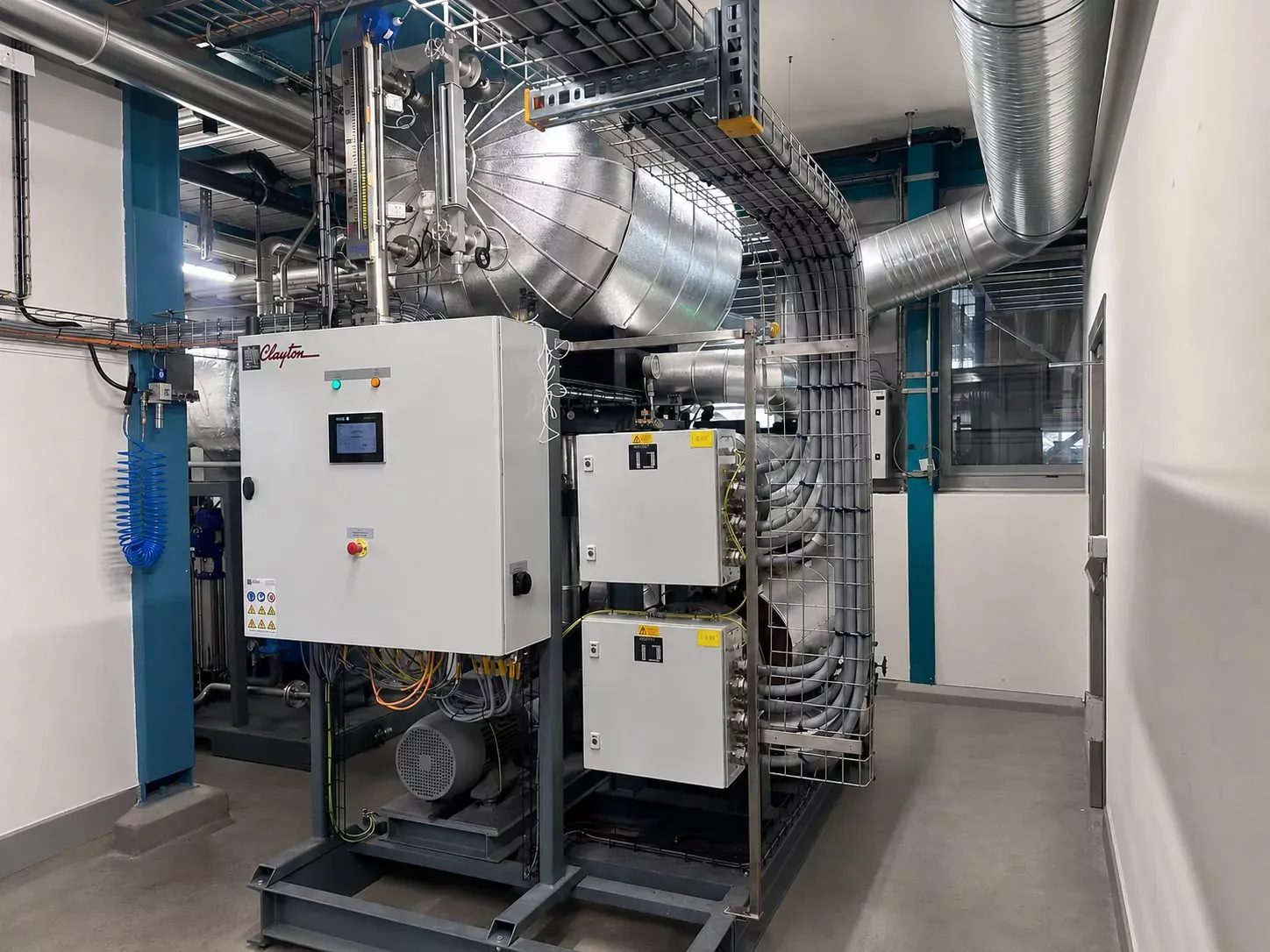
Industrial heat pumps introduce another possibility. By upgrading heat from a lower temperature to a useful process temperature, they can deliver more thermal energy than the electricity they consume. This makes them particularly interesting in factories where substantial amounts of recoverable heat are available.
Food processing plants, dairies, breweries and chemical facilities frequently have processes that release heat through cooling systems, wastewater or exhaust streams. Some of this energy can potentially be recovered and reused.
The feasibility of a heat pump depends primarily on the temperature of the available heat source and the temperature required by the production process. The greater the temperature lift, the more challenging it generally becomes to achieve a high coefficient of performance. A heat pump supplying moderate-temperature process heat may perform very differently from a system required to produce steam at elevated pressure.
For that reason, the first question should not necessarily be whether a heat pump can replace the existing steam boiler. It may be more useful to determine which parts of the process genuinely require steam and which could operate with hot water or another lower-temperature heat source.
In some installations, a heat pump can take over a significant portion of the thermal demand while a steam generator continues to supply the processes requiring higher temperatures or rapid changes in output. Such an arrangement can reduce overall energy consumption without forcing the entire production facility to rely on a single technology.
Industrial facilities often release useful thermal energy while purchasing additional energy to generate steam elsewhere in the same plant. Exhaust gases from engines, gas turbines and industrial processes can contain substantial quantities of recoverable heat. Where the temperature and available energy are sufficient, waste heat boilers can convert part of this energy into useful steam.
The potential benefit is considerable because the recovered energy would otherwise be discharged to the environment. Nevertheless, recovering waste heat only creates value when the recovered steam can be used effectively. A production facility may have abundant waste heat during periods when steam consumption is low, or its waste heat source may operate intermittently.
The timing, temperature and quantity of available energy must therefore be compared with the actual steam requirements. In some applications, waste heat recovery can cover a substantial part of the base load while another steam generator supplies additional demand. In others, the intermittent nature of the heat source may limit the amount of energy that can realistically be recovered.
A properly designed system considers both sides of the equation rather than simply installing the largest possible heat recovery unit.
For many manufacturers, the choice between gas-fired and electric steam generation is no longer necessarily an either-or decision. Hybrid installations allow different technologies to operate alongside one another, with steam production distributed according to energy prices, availability and production requirements.
An industrial facility might use an electric steam generator when electricity is competitively priced and switch to gas-fired production when electricity costs increase. Waste heat recovery can supply part of the steam demand whenever recoverable energy is available, while thermal storage may offer opportunities to shift electrical consumption to more favourable periods.
The potential becomes particularly interesting for factories with variable steam demand or access to several energy sources. However, combining technologies also introduces additional investment, controls and operational complexity. The benefits depend on how well the different systems work together and whether the savings justify the extra infrastructure.
A hybrid system is not automatically more efficient or economical simply because it incorporates several technologies. Its configuration and control strategy need to reflect the production process and the conditions under which the factory operates.
Energy consumption generally represents a major part of the cost of industrial steam, but comparing technologies based on fuel or electricity prices alone gives an incomplete picture. Boiler efficiency, standby losses, water treatment, blowdown, maintenance, inspections and the operation of auxiliary equipment all contribute to the annual cost.
Steam distribution also deserves consideration. Poorly insulated pipes, leaking steam traps, unnecessary pressure reductions and inefficient condensate recovery can consume a substantial portion of the energy supplied by the boiler house. In these circumstances, improving the steam system may offer a better return than immediately replacing the steam generation equipment.
The location of the steam generator can also influence system performance. Where practical, installing steam generation closer to the point of consumption may reduce distribution losses and the amount of pipework required.
Another frequently overlooked factor is the relationship between installed capacity and actual consumption. Oversized equipment can operate inefficiently at low loads, while insufficient capacity can compromise production reliability.
The most relevant figure is therefore not necessarily the maximum thermal efficiency stated in a technical datasheet, but the total cost of producing and delivering usable steam under real operating conditions.
Energy efficiency and decarbonisation are increasingly important, but industrial steam systems must first support the production processes for which they are installed.
In pharmaceutical manufacturing, steam quality, process requirements and reliability may be essential considerations. In food production, interruptions to the steam supply can affect product quality and production schedules. Chemical processes may impose demanding requirements regarding pressure, temperature stability and availability.
These requirements influence equipment selection as much as energy prices or emissions targets. A technology that performs exceptionally well under stable conditions may be less suitable for an application with frequent load changes. A highly efficient system may offer limited practical value if its output cannot follow production demand or if it introduces unacceptable downtime risks.
The evaluation must also account for future changes. Additional production lines, increased manufacturing capacity, changes in operating hours and the availability of new energy sources can all alter the requirements of the steam installation. An installation designed exclusively around today's operating conditions may become a limitation when the production process changes.
At Clayton, we believe the evaluation of an industrial steam system should begin with an understanding of the production process rather than a preference for a particular technology.
This means examining steam consumption throughout the operating cycle, pressure and temperature requirements, available energy sources, operating hours, load variations and opportunities for heat recovery. It also means questioning whether all current steam consumers genuinely require steam at the pressure supplied by the existing boiler house.
The findings may point towards a gas-fired steam generator, an electric installation, waste heat recovery, an industrial heat pump or a combination of technologies. In certain cases, optimising the existing steam distribution and condensate recovery system may be the most sensible first investment.
Industrial steam generation will continue to evolve as energy markets, industrial processes and available technologies change. No single solution will offer the best performance in every application.
The objective remains unchanged: providing the required quantity and quality of steam, at the right moment, with the lowest practical total cost and environmental impact, without compromising production reliability. The technology should serve the production process. The production process should not have to adapt to the limitations of the technology.
















Clayton is a global manufacturer of industrial steam solutions. European production and engineering have been carried out since 1961 in Bornem, Belgium, where Clayton of Belgium serves as the EMEA headquarters and main production hub for Europe, the Middle East, and Africa. The global headquarters of the Clayton Group is located in California, with additional production facilities in Mexico and Europe, and subsidiaries in France, Germany, the Netherlands, Spain, and the United Kingdom.

WORK SAFETY


