Contact us

Industrial Steam Solutions for the Food Industry

Steam is used throughout food production, from heating raw ingredients and cooking products to pasteurization, sterilization and cleaning. Each process places different demands on the steam supply. Some production lines require steam around the clock, while others operate in batches with frequent changes in demand.

Clayton steam generators are designed to supply high-quality steam while responding to changing process requirements. Whether a facility operates a continuous production line or several independent processing units, a well-designed steam system helps maintain reliable production and control energy consumption.

Industrial Steam Solutions for the Food Industry

Discover our most used steam solutions for the food industry.

Steam is a practical heating medium for food manufacturers because it transfers large amounts of energy through condensation. Depending on the equipment, steam can heat products indirectly through a heat exchanger or jacket, or be introduced directly into a process where suitable steam quality is assured.

Companies in the food industry often operate continuously, 24 hours a day. They require high performance equipment with very high operational availability. Therefore it is very important to optimise energy efficiency and to provide a service that avoids failures to provide operational availability of up to 100%.

  • Dry - High quality steam
  • Steam on demand
  • Lowest TCO

Usage

Food manufacturers face different heating requirements depending on their products, equipment and operating schedules.

Meat industry

Steam is used for scalding, cooking, smoking and heat treatment. Processing facilities also require hot water and cleaning systems to support hygienic production.

Fruits and vegetables

Typical applications include blanching, cooking, steam peeling, evaporation and sterilization. Steam requirements vary with the product, seasonal production volumes and processing equipment.

Cereal

Industrial bakeries use steam for oven humidification, while cereal processors may require steam for cooking, conditioning and other heat treatment processes.

Edible Oils and Fats

Steam is used in heating and refining processes. Certain oil-refining operations also require specialised steam conditions, depending on the equipment and process design.

Canned goods

Steam supports ingredient cooking, product heating and thermal sterilization. Batch retorts and cooking vessels can create significant variations in steam demand throughout the day.

Frozen products

Sugar industry

Steam provides process heat for syrup preparation, concentration, evaporation and cooking. Production lines can combine high continuous heat loads with smaller batch operations.

Chocolate and other confectionery

Coffee, tea, other beverages

Herbs, spices, condiments

Snack Foods

Snack production needs a series of thermal transformations: starch is gelatinized, moisture is driven off, dough is expanded and product is fried, roasted or dried.

Steam in snack food production

Steam Applications in Food Processing

01

Pasteurization and UHT Processing

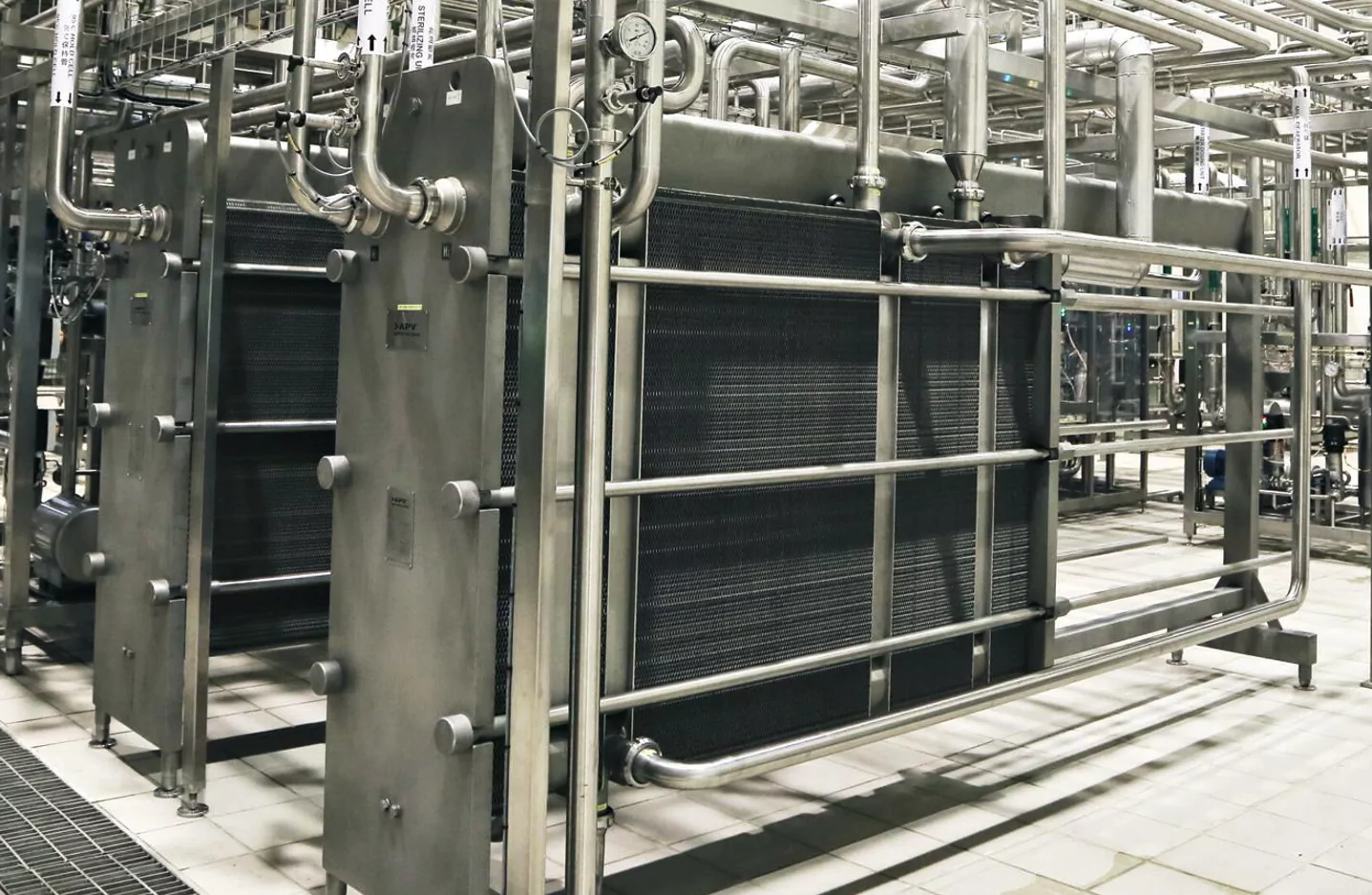
Dairy processors and manufacturers of liquid food products use steam to heat products to controlled temperatures. Steam can supply plate or tubular heat exchangers, while certain UHT systems use direct steam injection or infusion.

02

Evaporation and Concentration

Evaporators use steam to remove water from products such as milk, fruit juice, sugar solutions and food extracts. These processes can create a substantial and relatively steady demand for thermal energy.

03

Cooking and Blanching

Steam is used in industrial cookers, jacketed vessels and blanching equipment to process vegetables, sauces, soups, meat and prepared meals. Depending on the production method, steam demand may be continuous or batch-based.

04

Sterilization and Retort Processing

Retorts use steam, steam-air mixtures or steam-heated water to achieve the required thermal treatment of packaged food products. Steam demand often peaks during heating and decreases during subsequent stages of the cycle.

05

Drying and Dehydration

Spray dryers and other industrial drying systems can use steam as an indirect heating source for process air. Applications include milk powder, food ingredients, coffee extracts and nutritional products.

06

Cleaning-in-Place (CIP) and Sterilization-in-Place (SIP)

Steam can heat water and cleaning solutions in CIP systems and, where required, supply SIP processes. These operations frequently take place between production runs, creating additional steam demand outside normal production hours.

Why Choose Clayton for Food Processing?

Steam on Demand

A responsive steam supply helps food manufacturers manage variable production loads without depending on a continuously operating large steam reserve.

High-Quality Steam

Stable steam conditions and appropriate steam quality are important for reliable heat transfer. Where steam comes into direct contact with food, additional steam-quality and food-safety requirements must be addressed.

Energy-Efficient Operation

Matching steam generation to actual process demand can help reduce unnecessary energy consumption. The overall result depends on the operating profile, system design and available heat recovery.

Compact Steam Systems

Clayton offers compact steam generators and packaged steam solutions that can be integrated into existing or new food production facilities.

Reliable Production Support

Steam availability is directly linked to production continuity. Correct system sizing, maintenance and appropriate redundancy are therefore important considerations for food manufacturers.

Making steam is simple. Making steam with maximum efficiency is Clayton's speciality.

Discuss Your Food Processing Steam Requirements

Whether you are planning a new production line, expanding capacity or replacing an existing boiler system, Clayton can help evaluate the steam requirements of your food processing facility.

Contact Clayton to discuss your steam application and production requirements.

Contact us

Frequently Asked Questions

What is steam used for in the food industry?

Steam is commonly used for pasteurization, cooking, sterilization, evaporation, drying and the production of process hot water. It also supplies heat for cleaning and equipment sterilization.

What is the difference between continuous and batch steam demand?

Continuous processes require steam over extended periods, while batch processes consume steam during specific production stages. Facilities combining both types need steam systems capable of handling changing loads.

Can industrial steam be used in direct contact with food?

Yes, but the steam must meet the applicable food-safety requirements for its intended use. Conventional plant steam is not automatically suitable for direct food contact. Appropriate water treatment, steam generation and distribution design are essential.

How do you select a steam generator for food processing?

Selection depends on peak and average steam demand, operating pressure, steam quality, production schedules, available utilities and the required level of redundancy.

CO2 Energy Efficient

Logo partner Agfa Logo partner Danone Logo partner Pfizer Logo partner Bayer Logo partner JTI Logo partner Unilever Logo partner Coca cola Logo partner L'oréal Logo partner BASF Logo partner GSK Logo partner Knorr Logo partner Mars Logo partner Nestlé Logo partner P&G Logo partner Siemens Logo partner Esso Logo partner Spie Logo partner Maersk Logo partner Pepsico Logo partner Q8 Logo partner Solvay Logo partner Heinz Logo partner EON