Published: Dec 17, 2025
Around the world, companies are accelerating their efforts to decarbonize production and reach ambitious net-zero targets. Industrial heat (much of which is supplied through steam generation) represents a major portion of global energy use and emissions. As policy pressure increases and corporate sustainability commitments become more concrete, rethinking how steam is produced has become an essential part of industrial transition strategies. Electrification powered by renewable energy is often seen as the most straightforward path to decarbonization, yet real-world constraints make a full switch difficult for many facilities. This is where hybrid steam generation enters the picture.

While renewable energy capacity is rising, electricity prices remain highly volatile. When wind and solar resources are abundant, electricity can be competitively priced (even exceptionally cheap). But during periods of low renewable availability or high system demand, prices can rise sharply. For industries that rely heavily on steam, these cost spikes translate directly into higher operational expenditures (OPEX).
This uncertainty creates risk. Companies want to embrace electrification to reduce emissions, but they must also protect their bottom line. A production process that becomes too expensive to operate or whose economics swing unpredictably from hour to hour is not sustainable. As a result, many facilities hesitate to rely solely on electric steam production, preferring the predictability of fossil-fuel systems during expensive electricity periods.
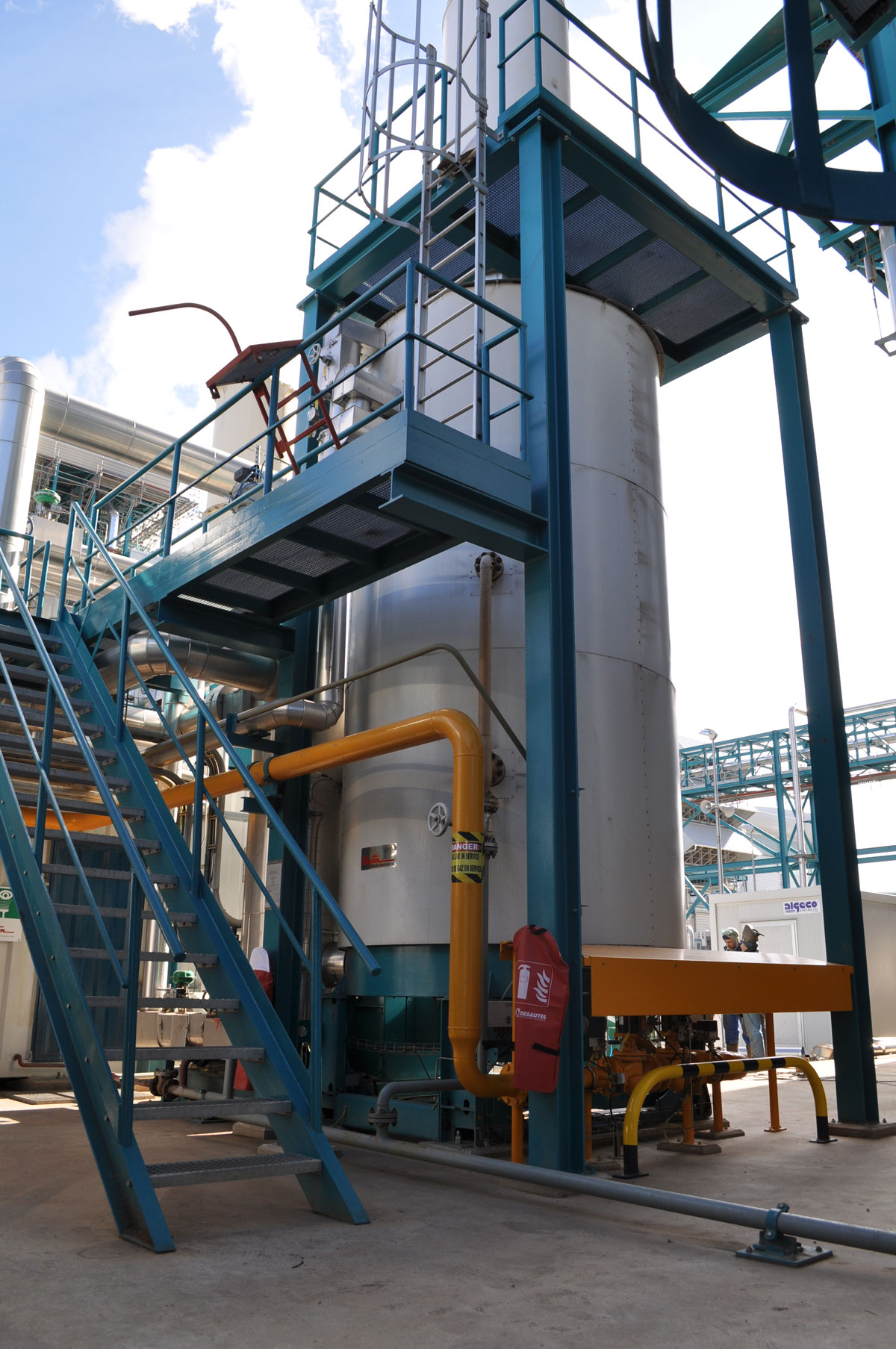
In addition to price volatility, many industrial plants face physical limits. Existing grid connections often cannot support the full electrical load required to replace gas-fired boilers with electric units. Upgrading the grid connection can be:
These constraints slow down electrification projects and can make a full transition unfeasible in the short term.
Hybrid Steam Generation: The Best of Both Worlds
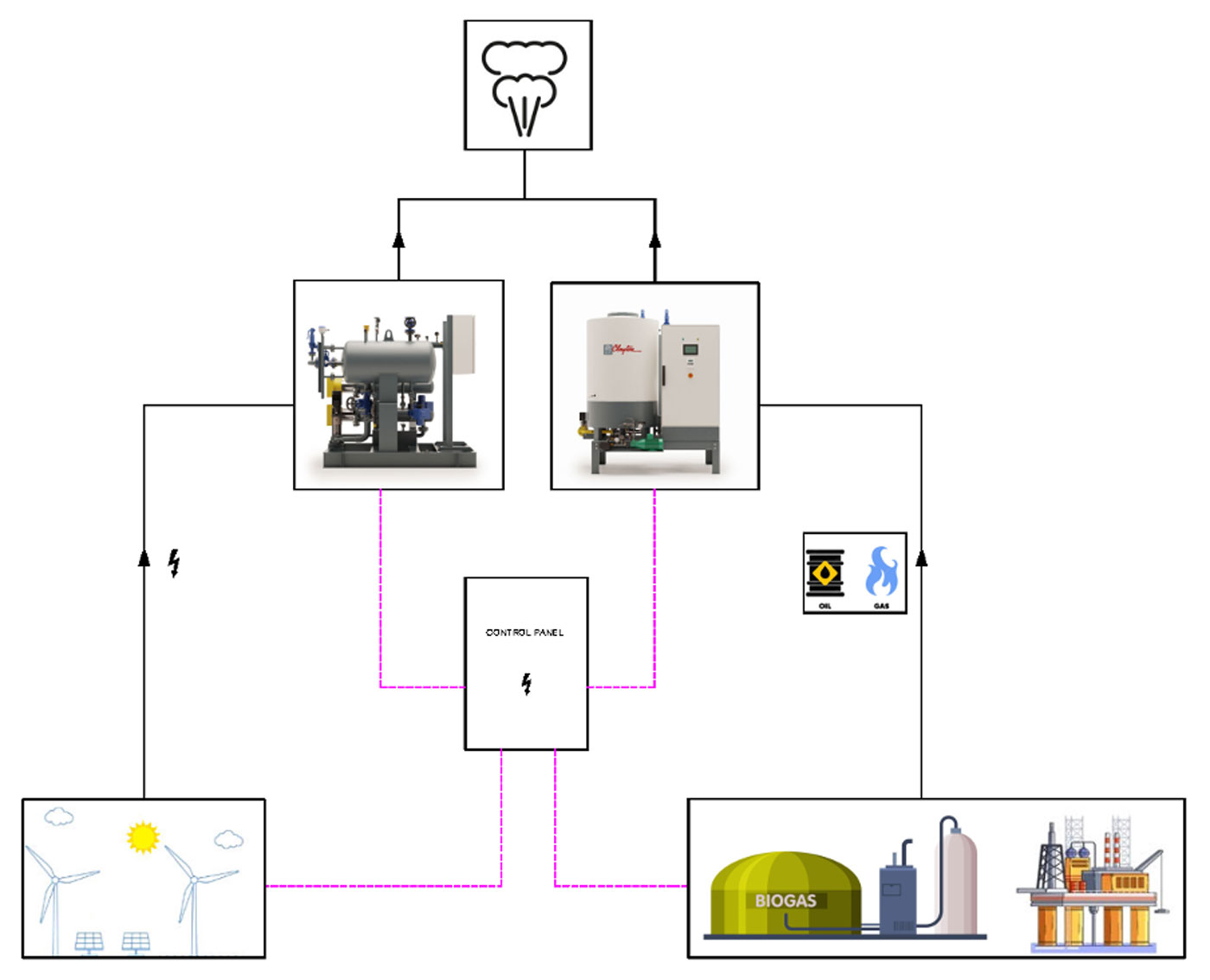
A hybrid steam generation setup, typically combining an electric boiler with a gas-fired boiler, provides a strategic, flexible pathway forward. Instead of forcing a binary choice between electrification and fossil-based systems, a hybrid approach allows companies to intelligently switch between the two based on economic and operational conditions.
The key benefits of a hybrid setup are:
The strength of a hybrid steam generation system lies not only in its hardware but in how intelligently the two units are controlled. When paired with modern energy management systems and real-time pricing data from energy suppliers, hybrid setups can achieve remarkable flexibility and cost efficiency.
Most industrial energy suppliers can now provide detailed pricing schedules for electricity and gas, reflecting the specific contract structure. These price signals may be offered:
By integrating these prices into the plant’s control architecture, operators can automatically determine the most cost-effective steam generation strategy at any given time.
A widely used approach is a master–slave control architecture, where a central controller determines the steam load distribution between the electric boiler and the gas-fired boiler. This controller continuously evaluates:
Based on these inputs, the system decides which boiler acts as the master (primary producer) and which acts as the slave (secondary producer) at any moment.
















Clayton is a global manufacturer of industrial steam solutions. European production and engineering have been carried out since 1961 in Bornem, Belgium, where Clayton of Belgium serves as the EMEA headquarters and main production hub for Europe, the Middle East, and Africa. The global headquarters of the Clayton Group is located in California, with additional production facilities in Mexico and Europe, and subsidiaries in France, Germany, the Netherlands, Spain, and the United Kingdom.

WORK SAFETY



