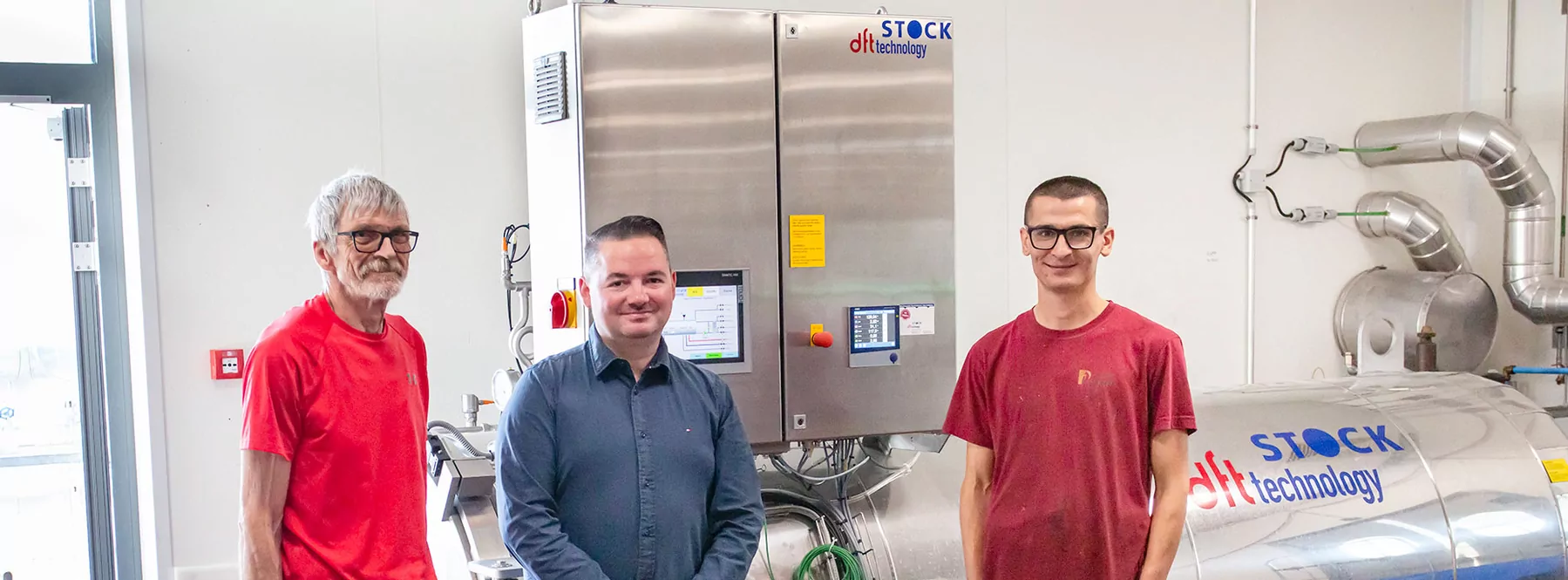

Through a comprehensive production overhaul, the family-run company Tiernahrung Pfaffinger from Ruhstorf has made the transition from small-scale, artisanal niche production to a safe, industrially scalable production standard.
The production of classic BARF food (Biologically Appropriate Raw Food), which had been tried and tested for decades, was increasingly posing microbiological risks. Whilst the legal limit for pet food is 5,000 enterobacteria, raw meat alone reaches seven to ten times this level simply through storage and processing. For this reason, Pfaffinger decided to replace the traditional BARF range with a new, safer process.
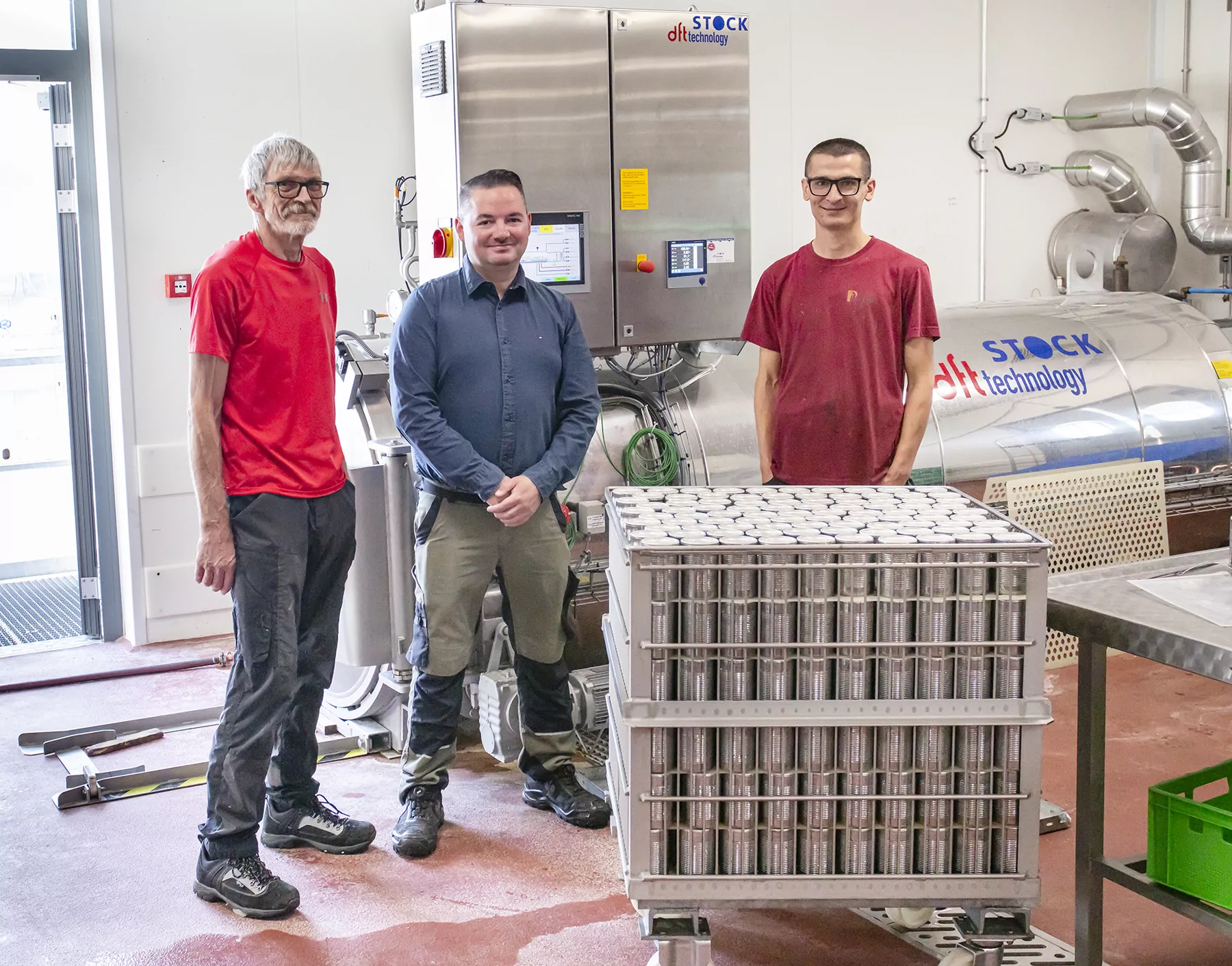
The decisive step took place in June 2025 with the planning and installation of a completely new production line. For the company, there was no question that the meat would continue to be minced without artificial additives and processed to the highest quality standards. To ensure maximum product safety, the raw material was to be cold-filled into tins in future – with a target production rate of up to 120 units per minute.
By the end of March 2026, the time had come: the planned production line, the installation of which was largely overseen by the new operations manager, Damian Kardas, went into operation following an investment of around 1.2 million euros.
After filling, the sealed tins are transferred to an autoclave, which holds around 2,000 units of 400 grams each per cycle. There, the food is heated to 128 °C using steam – ensuring that the new BARF product remains germ-free and safe to store for at least two years.
Sterilisation in the autoclave requires, above all, a reliable heat source: a Clayton steam generator now forms the energy-generating heart of the new plant.
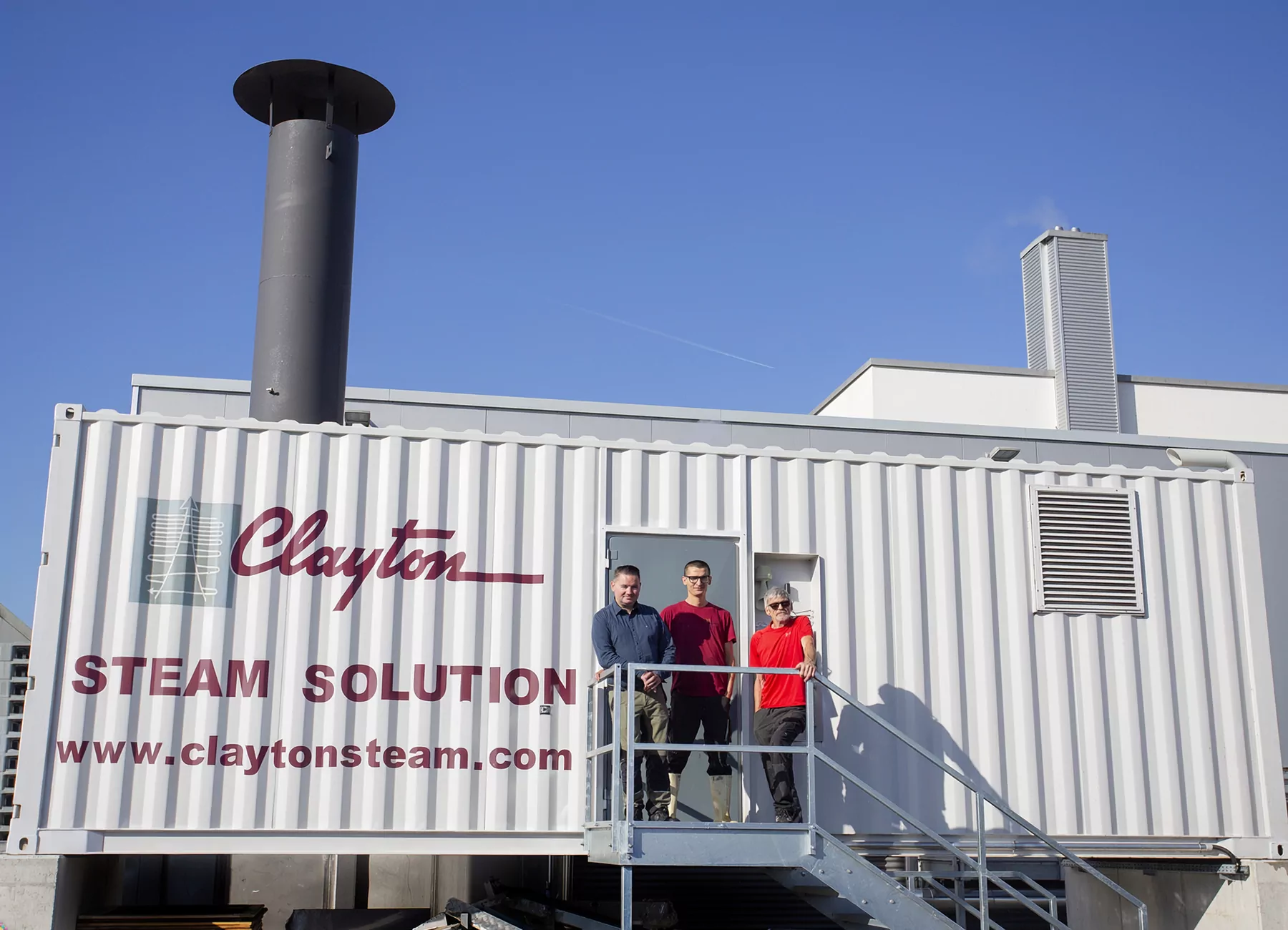
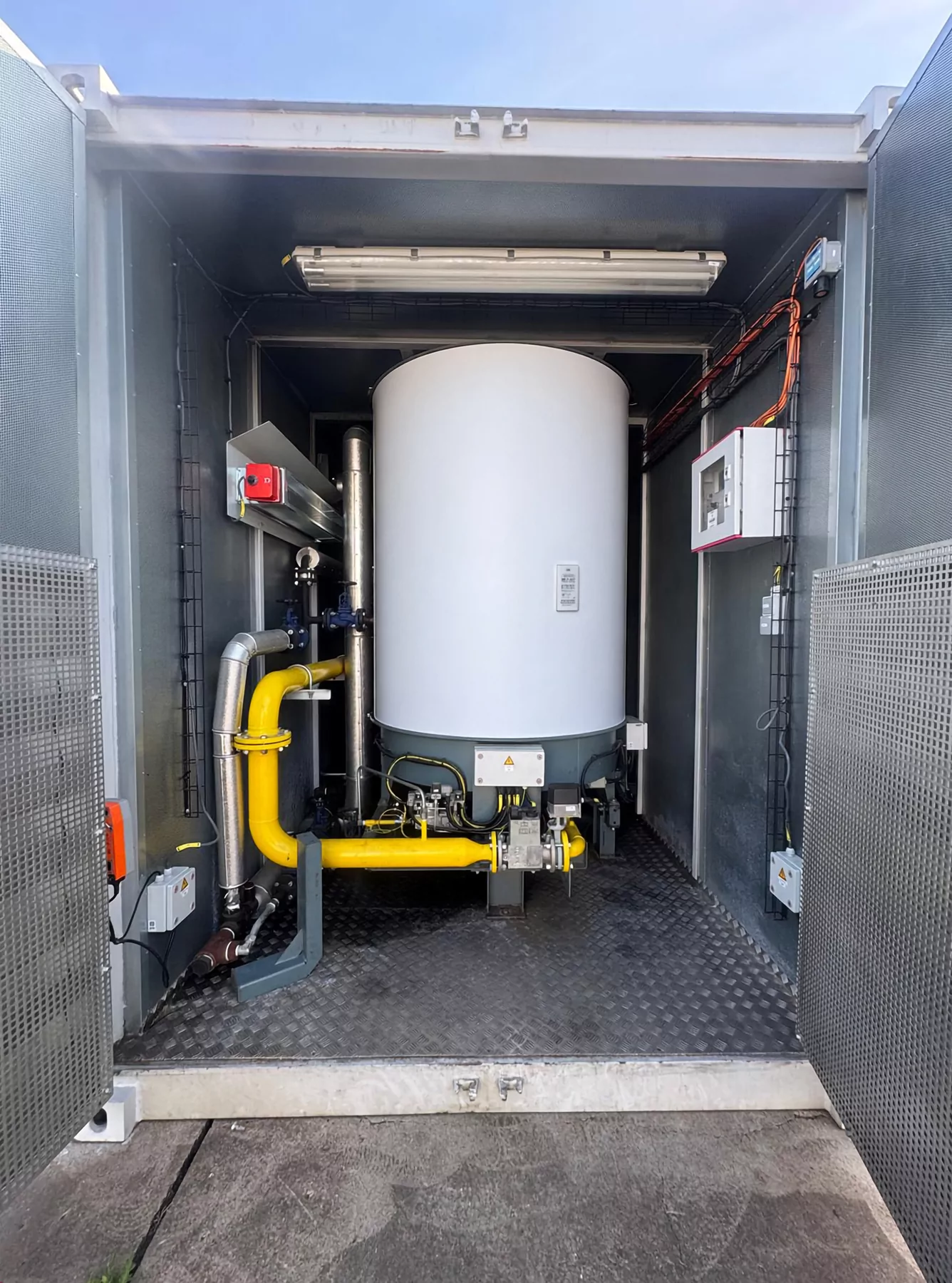
As the Pfaffinger site is located in a flood-prone area, it was decided, for safety reasons, to install the equipment outdoors. Clayton Germany supplied the rapid steam generator in a containerised unit, fully tailored to the specific site conditions of the business. With a container volume of just approx. 68 cubic metres, the supplier also spared the family-run business from lengthy bureaucratic processes.
The rapid steam generator installed was a ‘recently used’ unit that was individually adapted to current requirements. In its standard configuration, the unit initially delivered just under 5.9 tonnes of steam per hour. “That was a little oversized for our purposes at first,” explains Kardas. “However, we were able to throttle the system down to 3.9 tonnes per hour. In the event of an expansion in production, the steam fittings are already equipped with insulated T-pieces to allow for the connection of additional or larger autoclaves.”
The advantage of the boiler is that it can be controlled according to demand and only produces steam when it is needed for the two to three daily sterilisation cycles.
It regulates its output down to 20 per cent, thereby covering a wide partial-load range. In this way, it adapts flexibly to the respective steam demand.
During the cooling phases, the burner switches to standby mode. Every Clayton rapid steam generator is designed according to the ‘steam-on-demand’ principle.
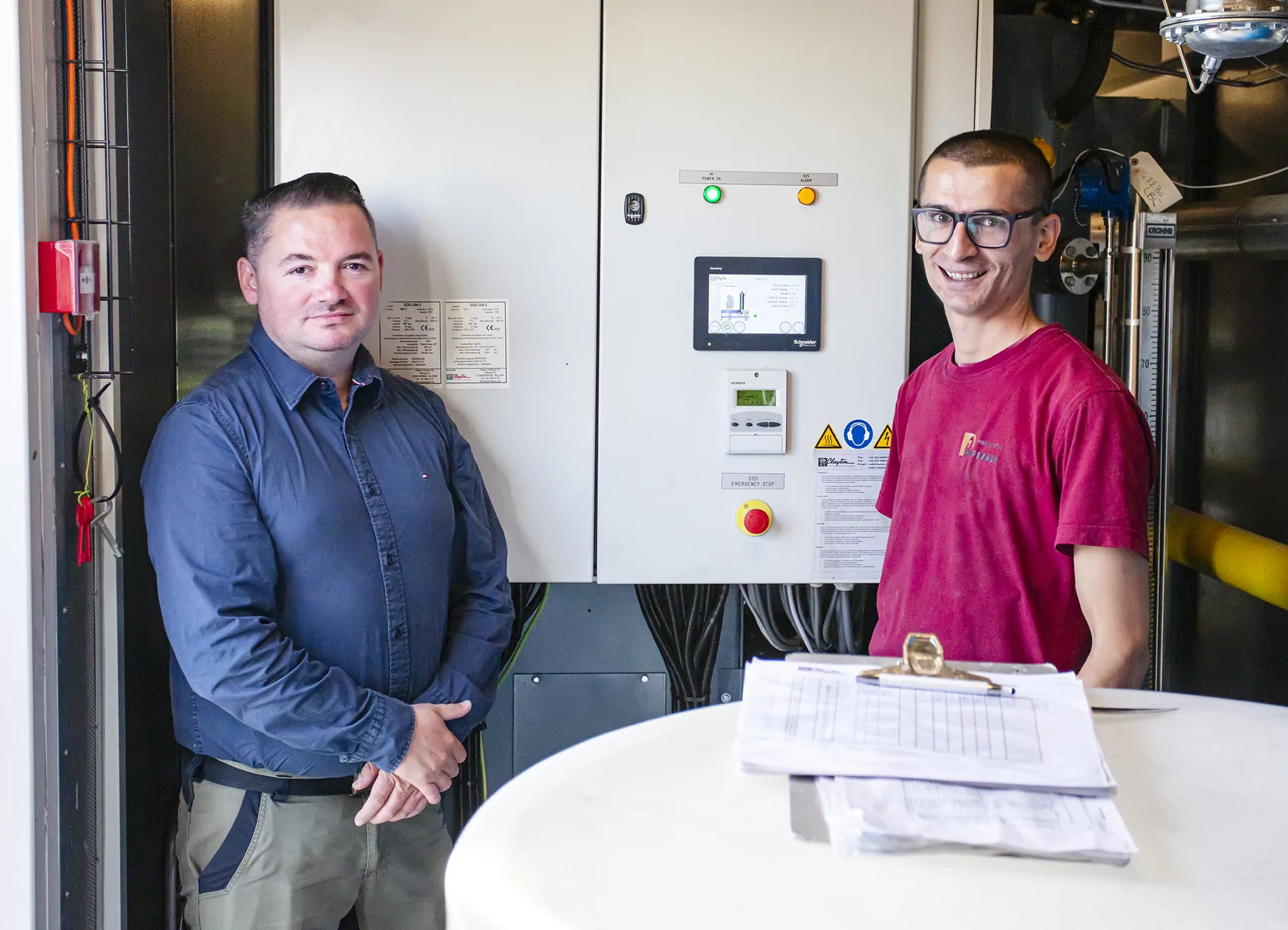
The longevity of the heating coil is characterised by high-quality manufacturing, regular monitoring of water quality, chemical dosing and operating conditions. “The results of this care can be clearly demonstrated,” says Stefan Wego, Sales Manager at Clayton Germany. “At a similar customer’s site, both 7.5 t/h steam generators have been in operation for over 21 years, still using their original heating coils.”
The technological transition is already showing initial success: Pfaffinger is planning a daily output of 25 tonnes for the coming twelve months. “We have now secured over 20 white-label customers for our production, who market our ‘Canned BARF’ products under their own brand names,” concluded Kardas.
















Clayton is a global manufacturer of industrial steam solutions. European production and engineering have been carried out since 1961 in Bornem, Belgium, where Clayton of Belgium serves as the EMEA headquarters and main production hub for Europe, the Middle East, and Africa. The global headquarters of the Clayton Group is located in California, with additional production facilities in Mexico and Europe, and subsidiaries in France, Germany, the Netherlands, Spain, and the United Kingdom.

WORK SAFETY