Published: Jun 29, 2026
The age of a steam boiler alone is not a reason to replace it. What truly matters is what it can still deliver today: an acceptable level of safety, sufficient availability, efficiency that matches the site’s requirements, and the ability to adapt to future needs.
The first warning sign is rarely subtle. Advanced corrosion, cracks, recurring leaks, insufficient remaining wall thickness, obsolete safety valves, incomplete documentation, or periodic inspections that become increasingly difficult to pass. In France, steam boilers are governed by the Decree of 20 November 2017 relating to pressure equipment, which requires regular inspections whose level of scrutiny increases according to the capacity of the installation.
When these warning signs begin to accumulate, the discussion moves beyond optimisation and into the realm of industrial risk management. At that stage, the question is no longer whether the boiler should be replaced, but when and how to do it.
A steam boiler must deliver the required steam flow, at the required pressure, at the right time. When this balance starts to falter, the consequences extend far beyond the boiler house.
Unplanned shutdowns become more frequent. Spare parts become increasingly scarce and, in some cases, impossible to source. Corrective maintenance gradually takes precedence over preventive maintenance, bringing with it a constant sense of uncertainty for technical teams. The most relevant warning sign does not necessarily appear in maintenance reports. It becomes evident when technicians spend more time keeping the boiler operational than operating it under normal conditions.
In this context, production losses often become more costly than the repairs themselves, although this impact is rarely quantified comprehensively.
An increase in fuel consumption while maintaining the same steam output is a warning sign that should never be ignored. The causes can be numerous: fouled heat transfer surfaces, inadequate water treatment, a poorly adjusted burner, missing or undersized heat recovery systems. High flue gas temperatures are a classic indicator of reduced heat transfer efficiency.
Before concluding that replacement is necessary, three scenarios deserve careful technical and financial evaluation: upgrading the existing installation, carrying out a targeted retrofit, such as replacing the burner, economiser or control systems, or opting for a complete replacement. None of these options is inherently good or bad. Everything depends on the actual condition of the installation and the intended operating horizon.
This is one of the most common situations, yet also one of the least recognised. Many boiler plants were designed for industrial operations that no longer exist in their original form: new production schedules, additional production lines, changing steam demand, more variable operating conditions, or stricter quality requirements.
An oversized boiler operates in short cycles, resulting in reduced efficiency, accelerated wear and unstable control. An undersized boiler directly limits production capacity. In both cases, the problem is not the equipment itself, but the gap between what it is capable of delivering and what is now required of it.
The question is not how much a new boiler will cost tomorrow, but how much the existing one is costing today.
Fuel, routine maintenance, production downtime and losses, statutory inspections, increasingly expensive spare parts, residual risks, emissions, lack of operational flexibility… when all these cost elements are honestly consolidated, the total cost of ownership of an ageing installation often reveals unexpected insights. What initially appears to be a major investment frequently proves to be the most rational decision.
An increasing number of industrial companies are now integrating their steam systems into a broader reflection on their energy transition: decarbonisation, switching to biogas or biomass, partial electrification, waste heat recovery, or hybrid energy systems. In this context, every replacement project represents a pivotal moment in the life of the installation. It provides an opportunity to rethink the entire steam system architecture and to consider developments that go well beyond a straightforward like for like replacement.
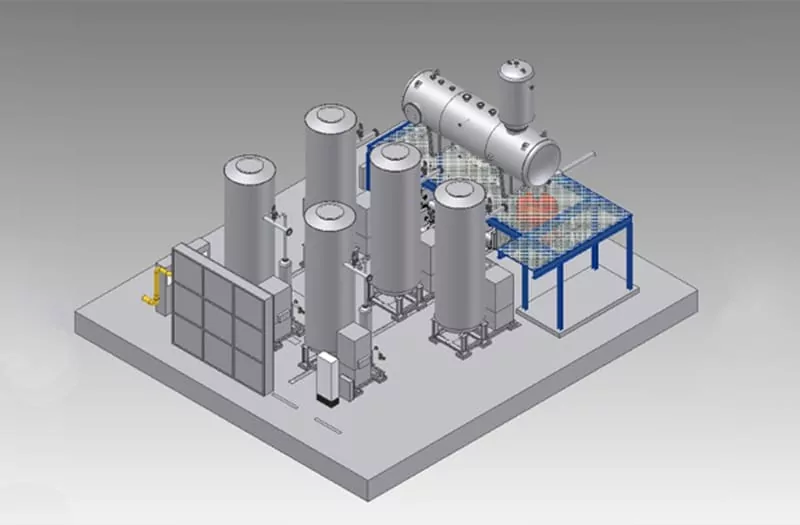
There is no universal age limit for a steam boiler. Some boilers that are more than thirty years old continue to operate reliably and economically, while others become a burden much sooner. Age is neither a guarantee nor a reason for replacement.
What distinguishes companies that manage this challenge successfully is rarely the size of their investments. Rather, it is the consistency with which they question whether their steam system still genuinely meets their operational needs, without waiting for a major failure or regulatory enforcement action before taking action.
Waiting almost always proves more expensive. Planning ahead, on the other hand, provides options: choosing the right moment, defining the right scope of intervention, and selecting the solution that truly fits the application, whether that means a targeted modernisation or a complete replacement.

















Clayton is a global manufacturer of industrial steam solutions. European production and engineering have been carried out since 1961 in Bornem, Belgium, where Clayton of Belgium serves as the EMEA headquarters and main production hub for Europe, the Middle East, and Africa. The global headquarters of the Clayton Group is located in California, with additional production facilities in Mexico and Europe, and subsidiaries in France, Germany, the Netherlands, Spain, and the United Kingdom.

WORK SAFETY



